Creating a durable, long-lasting pathway requires selecting materials that bind tightly together rather than shifting underfoot like loose, rounded gravel. High-compaction surfaces provide the clean, solid stability of concrete while maintaining the natural beauty and permeability of raw stone. When designing walkways, patio bases, or heavy-use garden paths, property owners and professional hardscape contractors frequently evaluate two primary heavy-compaction aggregates: Decomposed Granite (DG) and Crushed Limestone.
Both materials excel at creating smooth, walk-over surfaces that resist tire rutting, foot depression, and weed intrusion. However, their physical compositions create distinct operational and aesthetic differences. Decomposed Granite is formed through natural geological weathering, giving it a softer texture and an earthy color palette. Crushed Limestone is mechanically crushed at a quarry, producing sharp, angular fragments that interlock with exceptional structural force. Choosing the right material depends on intended traffic weight, existing site drainage, and your specific design preferences.
Understanding Decomposed Granite: Composition and Aesthetics
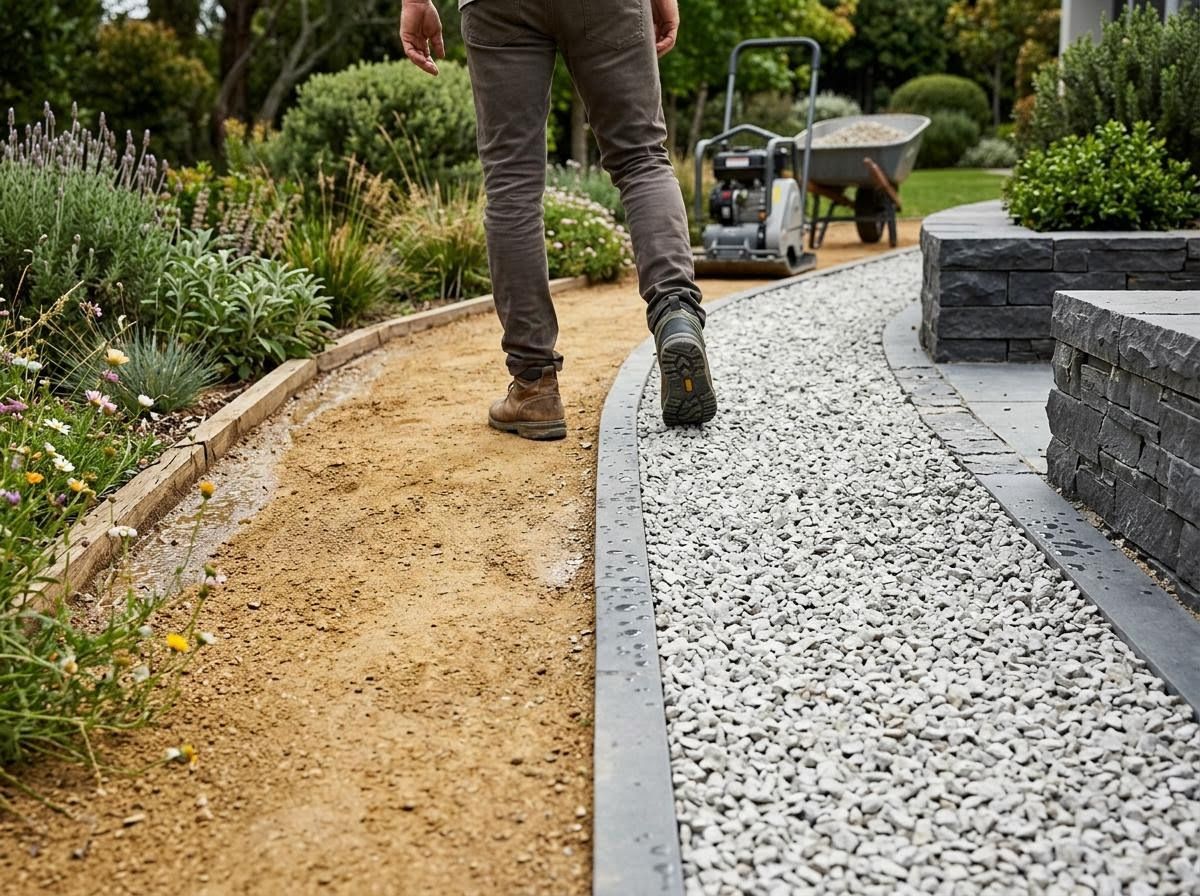
Decomposed granite is a naturally weathered stone aggregate made up of small granite particles, coarse sand, and microscopic silt. Because it forms naturally over time rather than through mechanical crushing, DG retains a unique texture that feels slightly softer underfoot while still compacting into a firm walking surface. Its natural fine content acts as a binder when hydrated and rolled, creating a cohesive path that resists erosion on light slopes. Visually, decomposed granite is favored for its rich, warm color palette—ranging from deep honey and rust to soft tan. It integrates effortlessly into rustic garden pathways, native plant beds, and relaxed seating areas where an organic, earthy look is desired without sacrificing foot stability.
Crushed Limestone Fines: Angular Interlocking Power
Crushed limestone screenings are produced by passing quarry stone through heavy mechanical crushers, creating a fine aggregate that spans from tiny, angular chips down to powdery stone dust. Unlike naturally weathered materials, every single piece of crushed limestone features sharp, faceted edges. When compacted with a mechanical plate compactor and light water misting, these angular surfaces lock together tightly to form a rock-hard, semi-rigid crust. This extreme density makes limestone fines one of the most durable natural path surfaces available. Its neutral gray and off-white coloring offers a clean, structured finish that pairs perfectly with dark flagstone steps, modern concrete pavers, and formal retaining walls.
Drainage and Permeability Considerations
While both aggregates offer high compaction, their performance under environmental stress and heavy rainfall differs significantly. Crushed limestone creates an incredibly dense, less permeable surface that sheds surface water quickly, making it ideal for channeling water away from structures or building sturdy, waterproof bases under heavy flagstone patios. Decomposed granite remains moderately more permeable, allowing rainwater to slowly percolate through into the subsoil, which is highly beneficial for nearby plant roots. However, un-stabilized DG can become slightly muddy or track on shoe soles during extended wet spells, meaning proper grading and drainage planning are crucial to keep the surface intact.
Selecting Based on Traffic and Durability Needs
Selecting between these two powerhouse materials comes down to your project’s practical demands and weight requirements. If you are constructing high-traffic access routes, equipment paths, or structural bases where maximum load capacity and crisp edges are mandatory, crushed limestone is the clear winner. Its ability to pack into a rigid matrix prevents shifting under heavy use, including garden carts and small machinery. Conversely, if you are designing winding garden walkways, rustic outdoor living rooms, or native plant transitions, decomposed granite provides unmatched warm visual appeal and a very comfortable walking feel. Matching the structural capability of the stone to your site's specific foot traffic ensures a beautiful, low-maintenance surface.
Source Your Bulk Stone Materials with Ozark Stone Yard
Ready to build a firm, beautiful, and highly functional pathway for your property? Ozark Stone Yard provides high-quality bulk crushed limestone, natural rock aggregates, and topsoil delivered directly to your job site. Whether you are a homeowner tackling a weekend yard upgrade or a professional contractor needing reliable, high-volume material sourcing, our team is here to help. Contact Ozark Stone Yard today to calculate your exact material tonnage, explore our extensive heavy stone selection, and schedule your bulk delivery for a flawless landscape transformation!